2025-03-11 15:27:45
The core purpose of introducing nitrogen (inert gas environment) in the UV curing process is to eliminate the interference of oxygen to the curing reaction, thus significantly improving the curing efficiency, material performance and product yield. The following are the specific reasons and mechanisms of action:
1. Solve the problem of oxygen polymer resistance (Oxygen Inhibition):
The free radical polymerization is blocked
UV curing causes free radicals, triggering chain polymerization of monomers and prepolymers. However, oxygen (O ₂) will react rapidly with free radicals to generate stable peroxy free radicals (ROO), interrupting the chain growth, leading to the following problems:
Incomplete surface curing (sticky, foggy).
Deep curing is difficult, and the material crosslinking density is reduced.
The action of nitrogen
By charging high purity nitrogen, the oxygen concentration is reduced to * * <100 ppm (about 21% O ₂ in traditional air) * *, greatly reducing the collision probability between free radicals and oxygen and ensuring the efficient completion of polymerization reaction.
2. Improve the curing efficiency and quality
Accelerated reaction rate
Under anaerobic environment, free radicals can quickly trigger chain reaction, shorten the curing time by 30% -50%, especially for thick coatings or high crosslinking density materials (such as some glue, high hardness coatings).
Improve surface performance:
High gloss: avoid oxygen causing the termination of the surface reaction, and the coating is more smooth and non-sticky after curing.
Reducing bubbles: an inert environment inhibits the gasification of volatile substances (such as solvents) and reduces micropores and bubble formation.
Enhance the deep curing ability:
The absorption of ultraviolet light by oxygen will weaken the penetration depth, and the nitrogen environment can improve the UV light utilization rate, ensuring the synchronous curing of the material inside and outside (such as thick adhesive layer or shading material).
3. Expand the scope of materials:
Some high-end materials are extremely sensitive to oxygen and can only cure without oxygen, such as:
Highly active acrylate: Oxygen will significantly reduce its reactivity.
Silicone gel and silicone materials: part of the silicone curing needs to completely isolate oxygen.
Biomedical glue: it requires rapid and complete curing to avoid toxic residues.
4. Process stability and environmental protection advantages
Reduce environmental interference:
Nitrogen environment prevents moisture, dust and other pollutants, and improves the process consistency (such as electronic component packaging and optical lens coating).
Environmental protection and safety:
No ozone generation: Traditional UV lamps will produce ozone (O ₃) in the air, and the nitrogen environment can avoid this problem.
Energy saving: rapid curing reduces energy consumption, and nitrogen gas can be recycled to reduce waste.
5. Typical application scenarios
electron industry
Chip packaging: prevent oxidation from decreasing electrical conductivity.
Flexible circuit board (FPC): avoid oxidation of copper foil affects welding performance.
Optical components
Lens coating: no oxygen curing to ensure high light transmittance, no atomization defects.
automobile making
LED lamp glue curing: deep curing to avoid thermal expansion, cold contraction and cracking.
medical apparatus and instruments
Biological glue curing: rapid anaerobic reaction ensures sterility and safety.
Nitrogen cure vs. Ordinary air curing:
Contrast item
Nitrogen UV curing
Ordinary UV curing
Curing speed
Fast (no oxygen resistance to poly)
Slow (inhibited by oxygen)
quality
Smooth, non-viscous
May be sticky or foggy
Applicable materials
More widely (oxygen-containing-sensitive materials)
Restricted
Environmental protection
It may produce ozone
No ozone, and nitrogen is recoverable
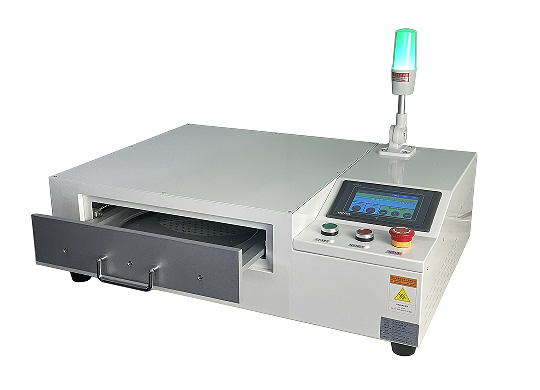
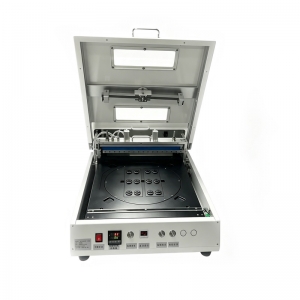
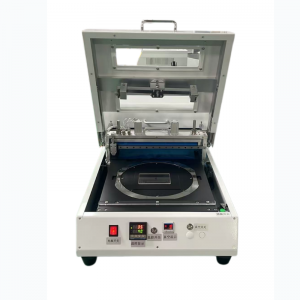
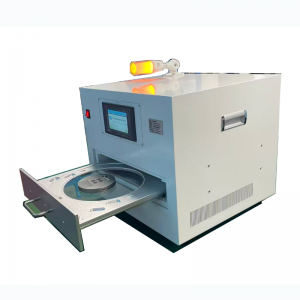
Nitrogen UV curing system vs. Ordinary UV Curing system
The essence of adding nitrogen is to break through the limitation of oxygen to UV curing reaction by controlling the reaction environment, so as to improve the efficiency, quality and material compatibility. For high value-added, high-precision manufacturing fields (such as electronics, optics, medical), nitrogen UV curing machine has become an indispensable process equipment.
Guangdong Spacelight Technology Co., Ltd.
Tel :
0086-18924372460Fax :
0086-0755-27289230Email :
uvcure@uvspacelight.comSkype :
live:1651063690jenniferWhatsapp :
+8618924372460




Copyright Guangdong Spacelight Technology Co., Ltd.

 English
 français
 Deutsch
 русский
 italiano
 español
 Nederlands
 العربية
 български
 svenska


 +8618924372460
 live:1651063690jennifer
 uvcure@uvspacelight.com
 0086-18924372460